


Khajuraho Temples
Syllabus: GS1/Art and Culture
In News
- Archaeological Survey of India (ASI) is planning to rebuild the headless Vishnu statue at Khajuraho’s Javari Temple.
Khajuraho Temples
- The Khajuraho Group of Monuments is a group of Hindu temples and Jain temples in Chhatarpur district, Madhya Pradesh.
- They were built during the Chandella dynasty between 950 and 1050 AD, and sculptures represent gods, heavenly beings, ordinary life, and lovers, masterfully carved from locally available sandstone.
- They are a UNESCO World Heritage Site, and the temples are famous for their nagara-style architectural symbolism and their erotic sculptures.
- They continued to be an important religious center throughout the 14th century but eventually fell with the fall of the Chandela dynasty.
- It was rediscovered by British engineer T.S. Burt in 1838 and recorded and conserved by Maharaja Pratap Singh, Alexander Cunningham and others.
- The first mention of Khajuraho and its temples is in the accounts of Abu Rahyan al Biruni( 1022 CE) and Ibn Batuta (1335 CE).
- The carvings on them reflect the four goals of life in Hinduism, viz, dharma, kama, artha, moksha.
Key Features
- The temples are categorised into three groups, that is, Eastern, Western, and Southern.
- The western group contains some of Khajuraho’s most magnificent royal temples, including the Devi, Varaha, Lakshmana, Kandariya Mahadeva, Parvati, Vishvanatha and Bhairava temples.
- The western group, which consists entirely of Brahmanical temples, is situated on the banks of the Sib-Sagar…” wrote Cunningham.
- The eastern group contains the Javari temple, where the headless Vishnu idol is located, as well as temples dedicated to Hanuman and Shiva.
- This group also includes a cluster of Jain temples protected within a modern compound wall to the south-east of the village.
- The southern group includes the Duladeva and Chaturbhuja temples.
- The western group contains some of Khajuraho’s most magnificent royal temples, including the Devi, Varaha, Lakshmana, Kandariya Mahadeva, Parvati, Vishvanatha and Bhairava temples.
Source: IE
Azerbaijan
Syllabus: GS1/Places in News
Context
- External Affairs Minister S Jaishankar’s visit to Baku recently pointed to a reset in relations with Azerbaijan that had soured in the last few years.
Recent Diplomatic Engagement
- Trade and investment: Both sides identified opportunities to expand trade and energy cooperation, recognising the potential for greater economic engagement.
- Energy cooperation: The discussions focused on strengthening cooperation in the oil and energy sectors along with exploring additional areas of economic partnership.
- Connectivity: Both the countries agreed to coordinate more closely on the International North–South Transport Corridor (INSTC).
- Capacity building: India proposed increasing the participation of Azerbaijani professionals in the Indian Technical and Economic Cooperation (ITEC) programme.
Azerbaijan
- It is located in Asia and is bordered by four countries – Russia, Georgia, Armenia and Iran.
- The east of the country is bordered by the Caspian Sea.
- Much of the north and west is covered by the Caucasus Mountains.
- Although Azerbaijan has a coast along the Caspian Sea, it is considered a landlocked country because neither it nor the Caspian Sea connect to the open ocean.
- Baku, whose first oil wells were drilled in the 1840s, is considered the world’s first oil town.
- The natural fire, known as Yanar Dağ, has been blazing in Azerbaijan for at least 65 years.
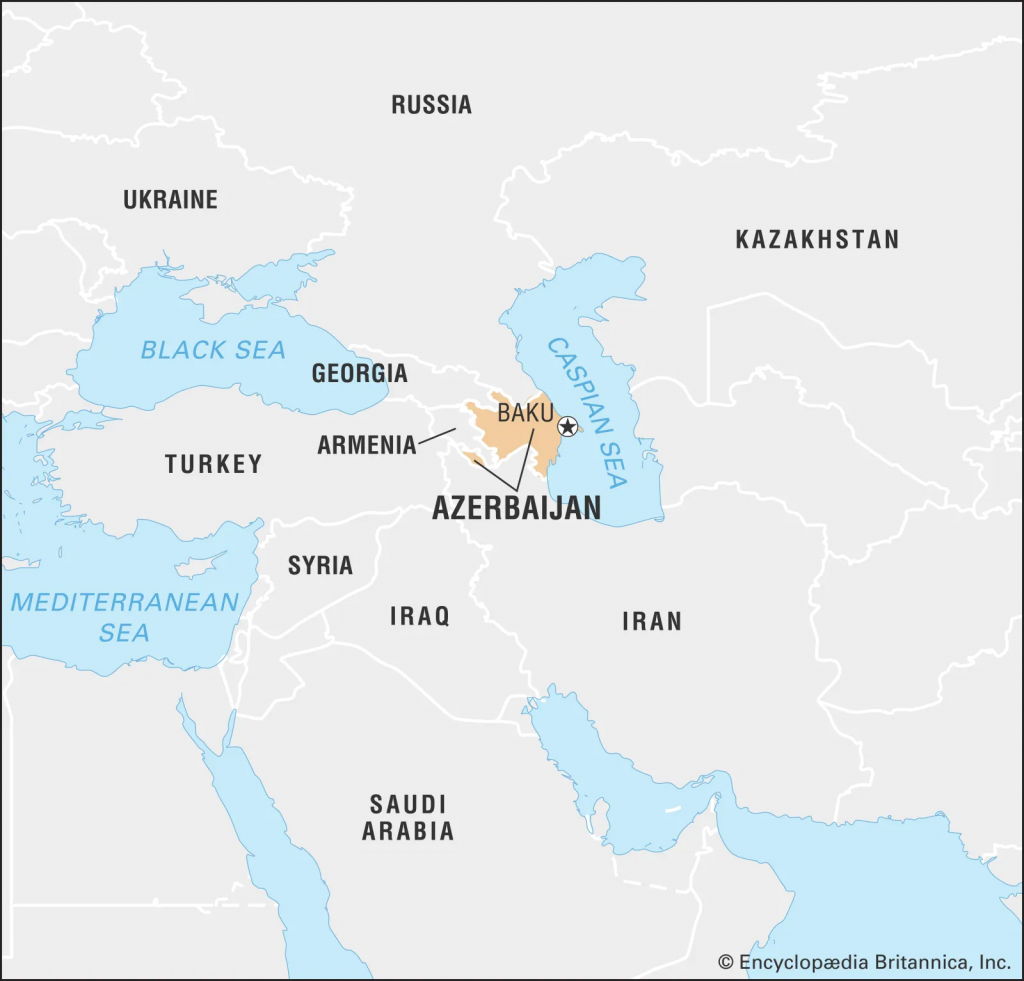
Source: IE
Liechtenstein
Syllabus: G2/ International Relations
In News
- PM Modi held bilateral talks with Liechtenstein’s Hereditary Prince Alois at Hyderabad House, New Delhi.
About Liechtenstein
- Government: A small European monarchy. The Prince is head of state, and Hereditary Prince Alois acts as head of state on his behalf. It has a one-house parliament, the Landtag, and the Prime Minister is Brigitte Haas.
- It abolished its military in 1868 and stayed neutral. Police handle internal security.
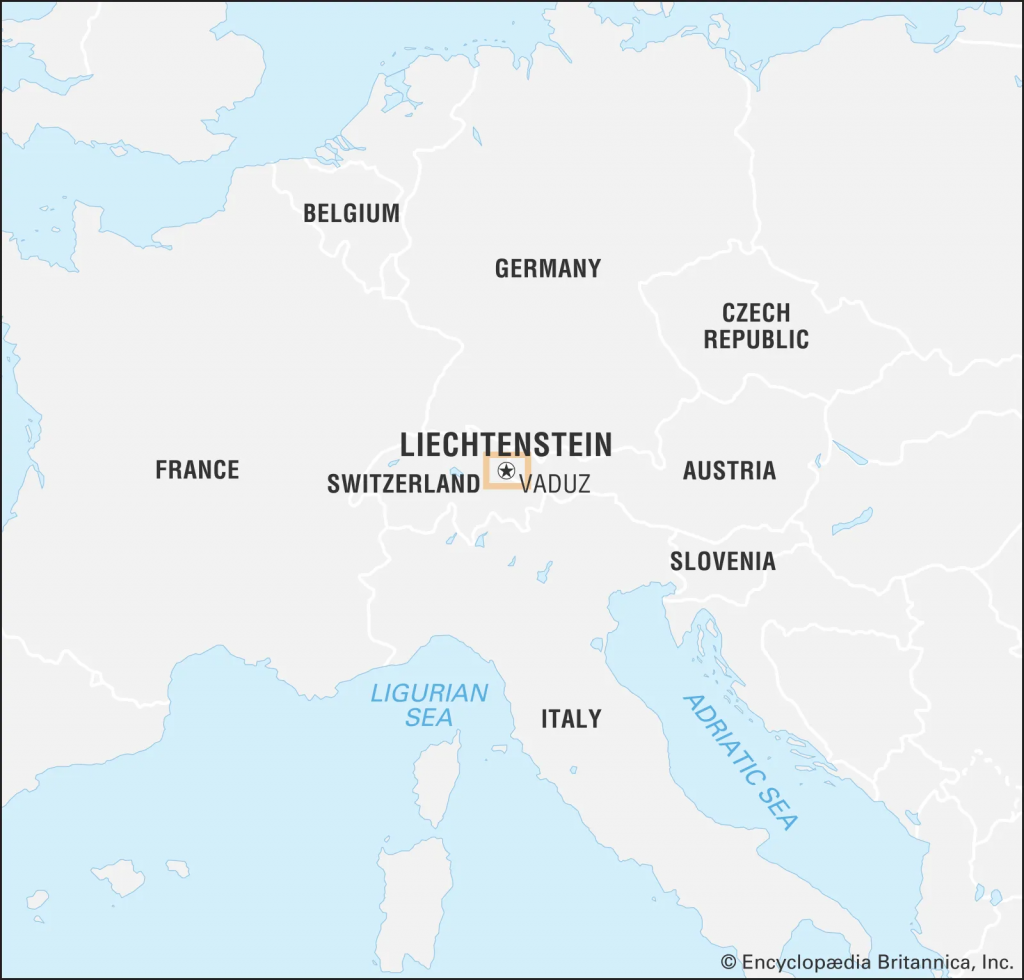
- Location: In the Alps, in the upper Rhine valley. It borders Switzerland and Austria.
- Doubly landlocked: It is one of only two such countries. It is landlocked, and so are all its neighbours. The other is Uzbekistan.
Why does it matter?
- For Europe: It is a member of EFTA and the European Economic Area, which links it to both European and global markets.
- For India: It is a route into the European market and a source of investment. Its strengths in high-tech industry, finance and innovation fit India’s push for investment and technology partnerships.
Source: TH
Atal Vayo Abhyuday Yojana (AVYAY)
Syllabus: GS2/Government Initiatives
Context
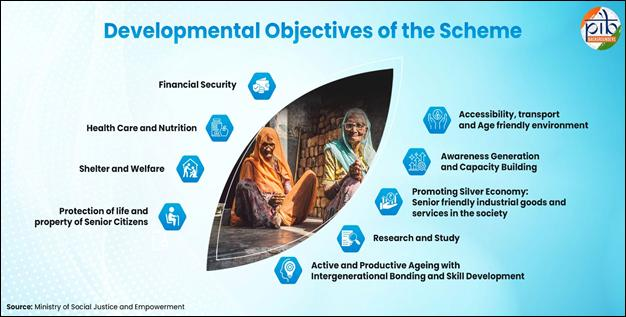
- The Atal Vayo Abhyuday Yojana (AVYAY) represents a comprehensive and evolving framework for addressing the multifaceted needs of India’s ageing population.
About
- Nodal Ministry: Ministry of Social Justice and Empowerment (MoSJE).
- Launch: Introduced in 2021, AVYAY subsumed and expanded the earlier National Action Plan for Senior Citizens (NAPSrC), bringing multiple senior citizen welfare interventions under a single umbrella scheme.
- Nature: A Central Sector Scheme aimed at supporting senior citizens and promoting active and productive ageing.
Do you know?
- India is undergoing a quiet demographic shift. As per Census 2011, the total population of Senior Citizens (aged 60 and above) is 10.38 crores.
- India’s elderly population is projected to reach 23 crores by 2036, underscoring the growing need for a comprehensive support system for senior citizens.
Source: PIB
Infrastructure Investment Trusts
Syllabus: GS3/Economy
Context
- India’s infrastructure investment trusts (InvITs) are attracting more investors, creating a potential avenue to channel domestic savings into roads, power transmission networks and other infrastructure assets.
About India’s infrastructure investment trusts (InvITs)
- Infrastructure investment trusts are investment instruments that work like mutual funds.
- It enables direct investment of money from individual and institutional investors in infrastructure projects to earn a small portion of the income as return.
- The InvIT is designed as a tiered structure with Sponsor setting up the InvIT which in turn invests into the eligible infrastructure projects either directly or via special purpose vehicles (SPVs).
- Regulatory framework: InvITs in India are regulated by the Securities and Exchange Board of India (SEBI) under the SEBI (Infrastructure Investment Trusts) Regulations, 2014.
- Income distribution: They distribute a substantial portion of their net distributable cash flows to investors, subject to SEBI regulations.
- Tradability: Listed InvIT units can be bought and sold on stock exchanges, providing investors with liquidity.
Source: TH
Previous article
Grey-Zone Warfare and the LAC
Next article
News In Brief 28-10-2026
